How to Build a Second Kitchen You Can Actually Cook In
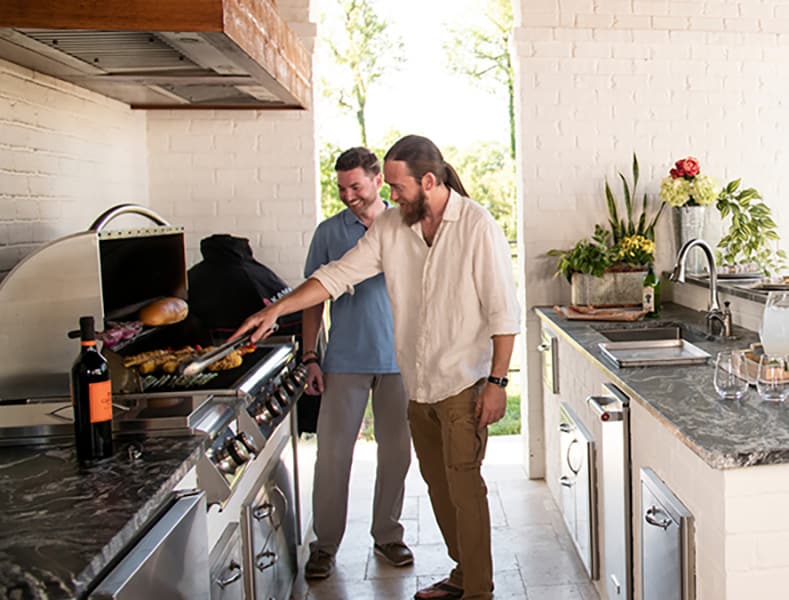
Even the most talented grill master can spend too much time running around. One minute you're searing something special, the next you're jogging inside for a platter. Slicing vegetables, then rushing back in to rinse the cutting board. Reaching for a cold drink and letting another 5 minutes slip by while the food and the party wait. The constant back-and-forth is the sign that your grill setup isn't yet a full, functioning outdoor kitchen.
The best outdoor kitchens end those trips entirely. That's the ultimate promise of outdoor kitchen essentials: not a longer appliance list, but a space complete enough to prep, cook, chill, serve, and clean up an entire meal without ever going back inside. Call it a second kitchen, one that lives outdoors but works exactly like the one you already trust.
I've spent years helping homeowners plan spaces that hold up to real cooking, not just weekend grilling. For me, a true outdoor kitchen should function just as well as the one inside your home. This guide breaks down what actually makes a kitchen complete—and what doesn't.
Key Takeaways
- A “second kitchen” is defined by whether you can prep, cook, chill, serve, and clean up a meal without going inside.
- Plan around the workflow, with a foot of prep and serving space for every foot of cooking equipment.
- Don’t forget the components that eliminate trips inside: a prep sink, cold storage, and counter space.
- Plan early for work involving water supply and drainage, electrical, gas, and ventilation.
- Build the space around how you actually cook and entertain, not based on your neighbor’s layout.
What Actually Makes It a “Second Kitchen”?
A grill on a patio isn't a second kitchen. A second kitchen is a space that can run an entire meal without you ever stepping back inside. That's a real test, and it has nothing to do with how many appliances you can fit outside. Feature count is a vanity metric. What matters is self-sufficiency. Can this space do it all, from prepping, cooking, and chilling, to serving and cleaning?
These are the five essential functions of a kitchen, indoors or out. Skip one, and you're navigating through the sliding door mid-cook. As I see it, the goal is function over form. A second kitchen should work the way you really cook, not serve as a showpiece that photographs well but falls apart the first time you host. That means building around your five jobs, not around a wishlist of gadgets.
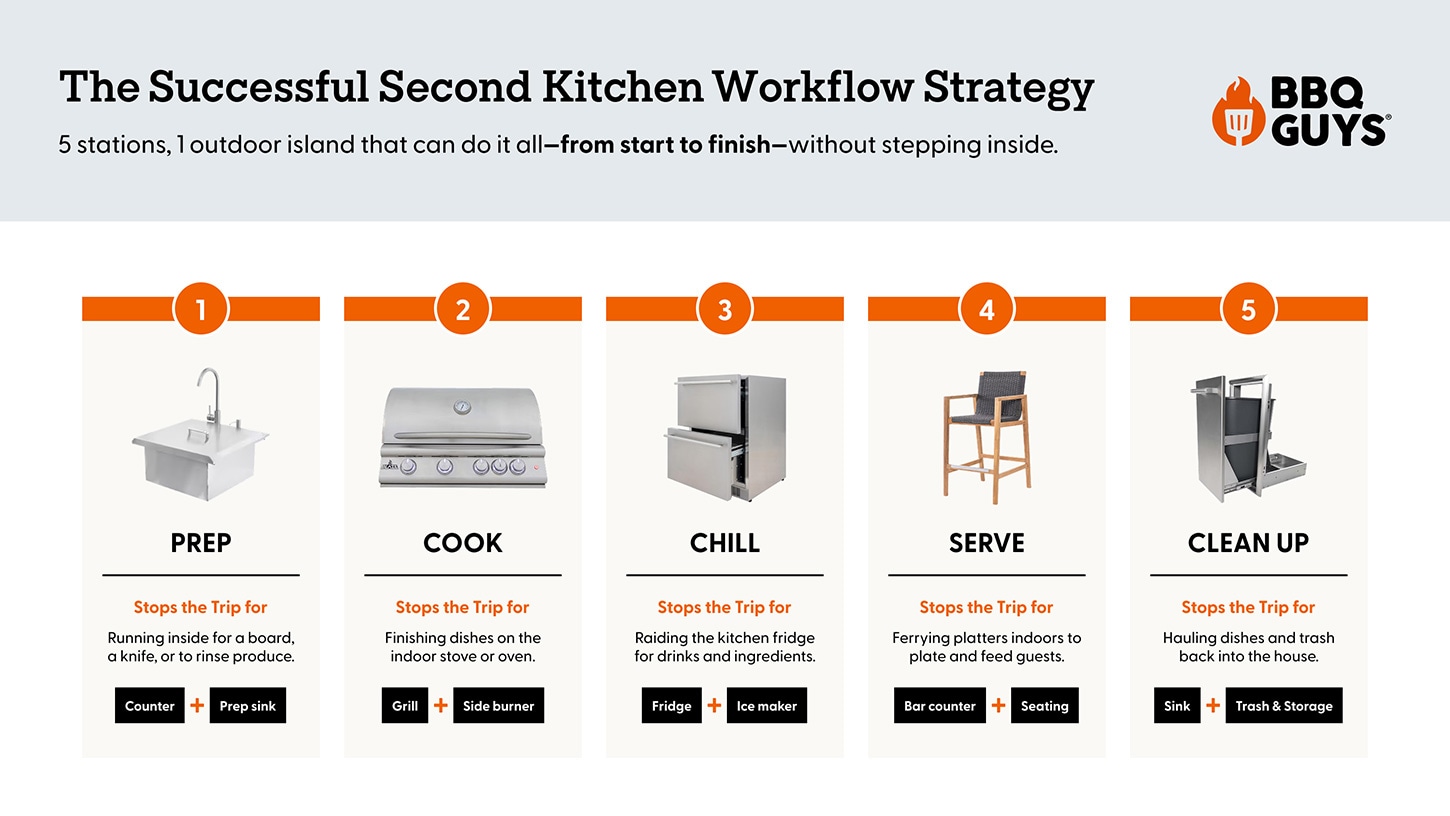
So let's walk through each station one at a time, prep, cook, chill, serve, and clean up, along with the behind-the-scenes systems (water, gas, electrical, ventilation) that make them all work together as one true outdoor kitchen.
Start With the Workflow, Not the Wishlist
I find that most people tend to plan an outdoor kitchen the way they'd fill a shopping cart, with the grill first and whatever looks good next: a smoker, second burner, a beverage center, keeping the layout as an afterthought. The pros work backward. They start with how a meal moves through the space, then build the layout around that movement.
That's the outdoor kitchen workflow. Each station needs its own footprint, and each needs to connect to the next without the cook doubling back or crossing their own path. Flow is what turns a collection of appliances into a kitchen that smoothly operates.
A Common Problem with Outdoor Kitchen Planning
I see the same mistake again and again. Homeowners cram in the cooking equipment and storage they'll rarely touch, then run out of the room for the two things every cook needs more of, which is prep space and serving space.
My recommendation is, for every foot of cooking equipment, plan for at least that much prep and serving space. That means if you have 10 feet of cooking area, you'll want 8 to 10 feet of serving and prep space. A smaller kitchen built around that ratio will always outperform a bigger one built around a wishlist.
The 5 Stations of a Complete Outdoor Kitchen
A complete outdoor kitchen does the following 5 jobs well, but skip or shortchange one of these stations, and you'll be walking back into the house all cookout long. Here's what each needs to succeed.
Prep: Counter Space and a Place to Work
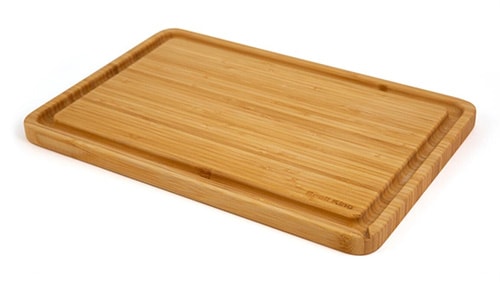
Prep is the job every outdoor kitchen underrates, and it's the first place people run short. This station handles the knife work, the trimming, the marinating, and the rinsing that happens before anything hits the grill—and when there's nowhere to do it, that work migrates straight back inside.
The fix starts with usable landing space on both sides of the grill, not just in front of it. You need somewhere to set down a platter, stage ingredients, and work a knife without crowding the cook. Countertops should be built for the outdoors with weatherproof stone or concrete that stands up to heat, moisture, and sun in a way indoor materials don't. Add a dedicated prep sink nearby, and rinsing vegetables or washing your hands no longer means a trip through the back door.
My rule still applies here: for every foot of cooking equipment, plan roughly a foot of prep space to match it. Skimp on prep space and the whole layout feels cramped.
Cook: The Grill Anchors It, but Match Heat to How You Cook
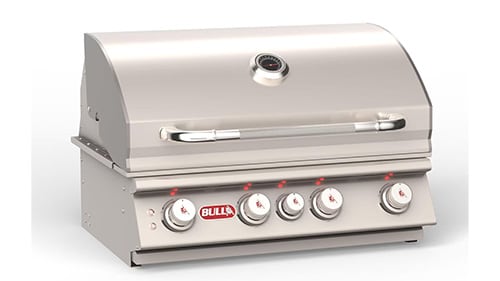
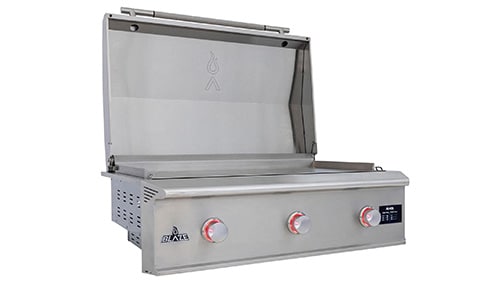
The grill is the heart of any outdoor kitchen, but "complete" isn't about how many burners you can fit on the island. It's about matching cooking power to the way you cook. Start with the primary grill. A built-in grill integrates into the island and reads as permanent, custom, and finished. A freestanding grill gives you flexibility to move, upgrade, or reconfigure later without touching the countertop. Both are legitimate choices, and the right one depends on your build and your budget.
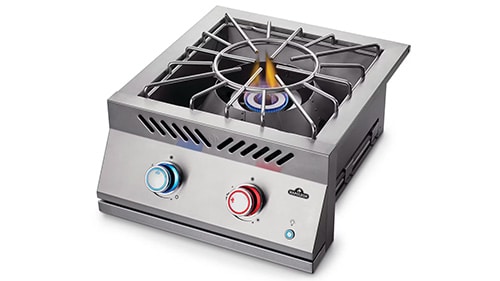
From there, add supporting heat only where it earns its footprint. A side burner handles sauces, sides, and stovetop works without crowding the main grates. A built-in pizza oven opens up a whole category of cooking that a grill can't do well. A power or sear burner delivers the high heat a good steak needs.
In my own setup, I prefer a big primary grill paired with a relatively small overall cooking footprint, and not a wall of appliances. I often warn customers to avoid cramming in every cooking gadget available. The logic for each addition is simple. Add what removes a trip inside, and skip what just fills space.
Chill: Cold Storage So You Stop Raiding the Indoor Fridge
No station kills more trips than this one. Every cold drink, every marinating tray, every forgotten stick of butter sends someone inside. The whole point of a second kitchen is to ensure that doesn't happen.
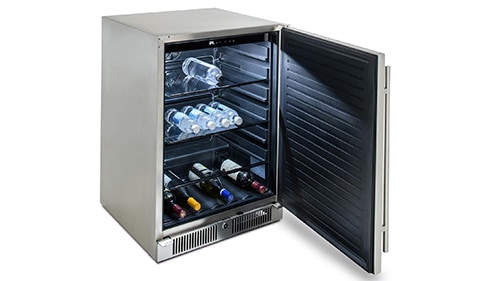
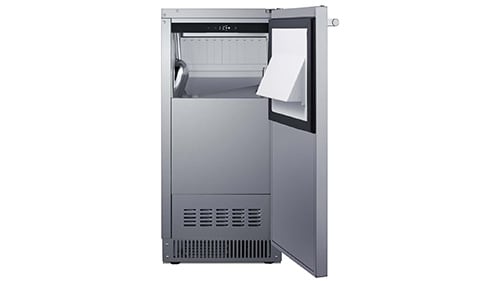
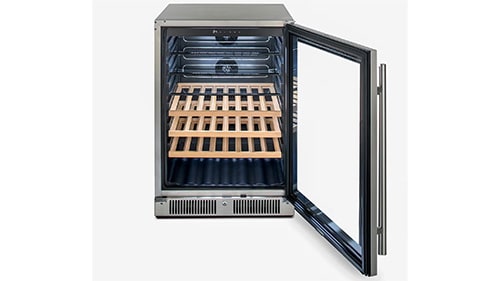
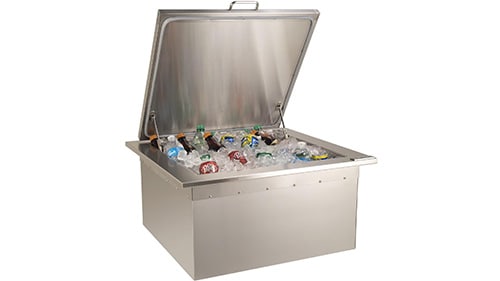
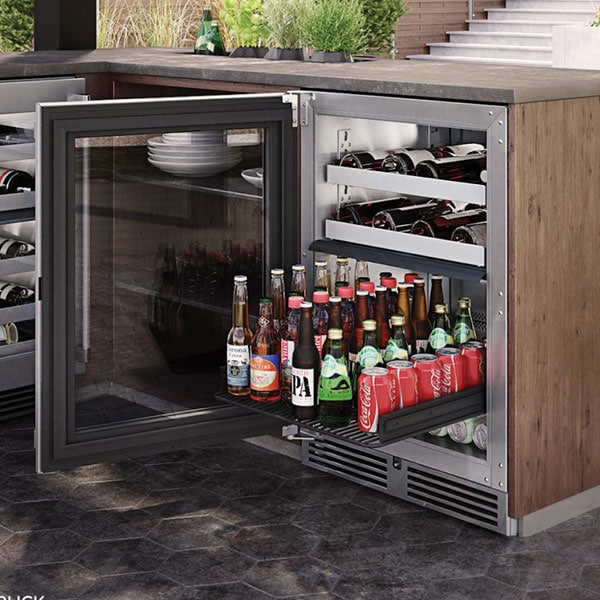
An outdoor refrigerator handles the job, but it has to be outdoor-rated. Indoor units aren't sealed against humidity and temperature swings, and they'll fail fast once summer heat hits the compressor. Look for refrigeration built specifically for outdoor use, then round it out based on how you entertain. Maybe a beverage center for grab-and-go drinks, an ice maker or insulated bin so the cooler stays inside where it belongs, and a kegerator or wine cooler if you’re hosting more than just grilling.
I'd recommend keeping the fridge, and the trash for that matter, out of the immediate cooking zone. They tend to pull most foot traffic of any station, and guests reaching past the cook for a beer causes the same disruption a trip inside would.
Serve: The Station Everyone Under-Builds
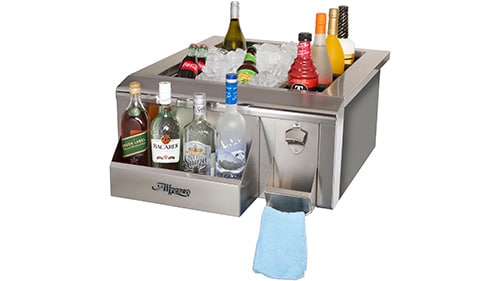
Serving is where the backyard cookout turns into a real gathering, and it's the station I often see getting shortchanged first. A bar or simple serving counter with an overhang for stools does the work of turning a cooking setup into somewhere people want to stand around. Seating within reach matters more than seating that just looks good, allowing guests to be close enough to talk to the cook rather than staged off to the side.
You also need a landing spot for finished food. Think a stretch of counter near the grill, but definitely not the prep counter because you don't want plated dishes competing with cutting boards and tongs. This is the prep/serve-space rule in action. That foot of serving space per foot of cooking equipment isn't optional overhead. It's what keeps the party moving instead of clustering around whoever's holding the platter. Get this right, and the kitchen stops being a station people cook at. It becomes the place where they gather.
Clean Up: Sink, Water, Waste, and Storage
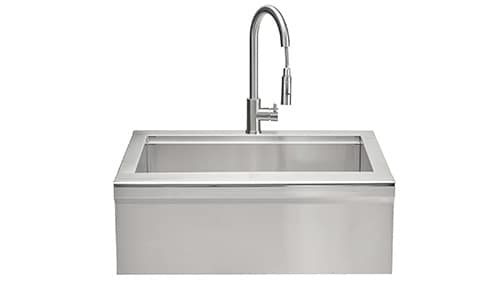
This is the station that closes the loop, and skipping it just relocates cleanup back inside. An outdoor sink handles rinsing dishes, washing hands, and prepping without a trip to the indoor kitchen. Hot water is part of that equation, and it's worth flagging early. Whether you tie into the house's line or add a dedicated water heater, plan it as a real decision, not an afterthought (more on that in the systems section below).
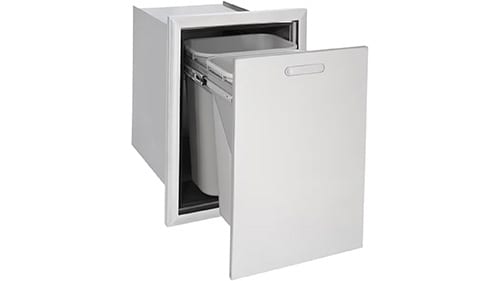
Trash and recycling drawers matter more than they get credit for. Keep them out of the cook’s direct path—the same rule that applies to the fridges applies here, since both draw constant foot traffic, and neither belongs between the grill and the serving counter.
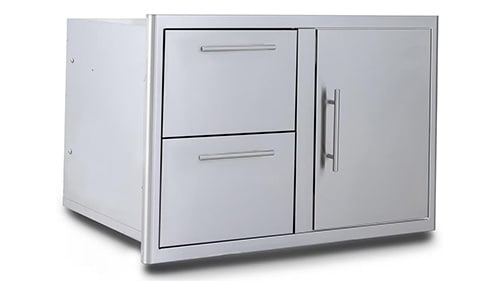
Storage rounds out the station. Weatherproof doors and drawers for tools, plates, and seasonings mean the cook isn't ducking inside for a spatula or a bottle of seasoning mid-meal. The more that lives outside within reach, the fewer the reasons anyone has to leave the party. Cleanup is also where the kitchen's plumbing, water, and drainage really show their work, which makes it the natural hinge into the systems that power everything else.
The Systems That Make It Real
This is the part most outdoor kitchen guides skip, and the part that determines whether your space works. It’s the infrastructure underneath it. When done correctly, every station above will run the way it’s supposed to. Done incorrectly? You’re stuck with a beautiful counter you can’t actually use.
-
Water: You need supply and drainage for the sink, plus a decision on hot water—either tie into an interior hot-water line or install a dedicated outdoor water heater. Skip this, and you’re back to hauling dishes inside.
-
Electrical: I’m a firm believer that you can’t have too many receptacles outside because everything needs a plug eventually. Plan for more outlets than you think you’ll need to handle appliances like refrigerators, ice makers, and lighting.
-
Gas: Natural gas versus propane, each with different infrastructure implications. Whichever you choose, plan the line early in the build, not after the layout is set.
-
Ventilation: Always plan for ventilation over your cooking equipment, and check your electrical and gas requirements early in the process, well before you’re picking finishes.
-
Four-season durability: Build with materials and systems that hold up to freeze-thaw cycles, humidity, and sun, not just a good summer.
How Complete Do You Need to Be?
"Complete" isn't a fixed checklist—it's relative to how you actually cook and entertain, and a focused build almost always beats an over-stuffed one.
| Tier | Who it Fits | Stations to Prioritize |
|---|---|---|
| The Weekend Cook | Grills often, entertains occasionally; smaller patio or budget | Cook + Prep + basic Chill (counter, grill, compact fridge or ice) |
| The Entertainer | Hosts regularly; wants guests to gather at the kitchen | Add Serve (bar + seating) and fuller Chill (beverage/ice) |
| The Full Second Kitchener | Cooks full meals outside year-round; often a custom build | All five stations + the systems to run them (water, gas, power, ventilation) |
Build It Around You
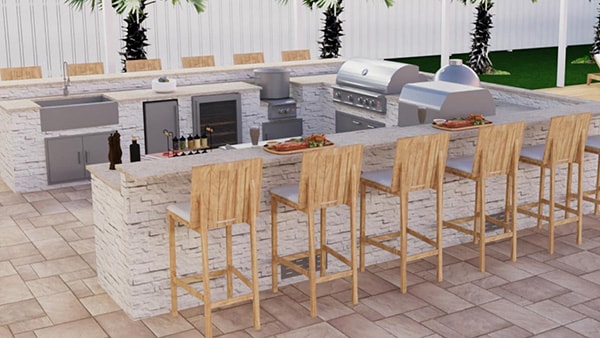
In my experience, the best outdoor kitchen isn't a smaller copy of your neighbor's. It's built around how you cook. Maybe that's a full five-station setup with a pizza oven and kegerator. Maybe it's a tight prep, cook, and clean-up run that handles weeknight dinners without fuss. Both are complete, because complete means it matches your workflow, not a checklist.
Not sure where your setup falls short? Run it through the five-station test (prep, cook, chill, serve, clean up) and see where the gaps are. From there, our component guides can help you fill them in. Or skip the guesswork and let BBQGuys provide you with a free 3D design consultation. We've planned thousands of these and we're ready to build yours. Let's get started.
How to Create a True Second Kitchen FAQ

Michael Hidalgo
Michael Hidalgo is the Director of PRO Sales, overseeing the national territory sales team and Backyard Design Centers. He helps builders create exceptional outdoor living spaces for their customers.
Comments
0 comments
Please sign in to leave a comment.